
 iOS
iOS Android
 React Native
 Unity
Unity Flutter
 Ionic
Ionic IOT
IOT OTT
OTT Wearable
 Angular
 Python
 Vue.js
 Node.js
 PHP
PHP Laravel
 .Net
.Net WordPress
 Shopify
 Drupal
 Magento
 Social Media Marketing
 PPC Expert
 Content Writers
 GEO
GEO
 Virtual Assistants
 IT Support
 Customer Support
 Order Processing
 Contract Reviewers
 Logistics Coordinator
 eCommerce Solutions
 Bookkeeping
 Tax Preparation
 AR/AP Specialists
 Automation Testing
 Manual Testing
 AI Developer
 ML Developer
 RPA Developer
 UI/UX Designer
 Graphic Design
 Animation
 3D CAD
Building a website can feel like a big mystery, especially if you’re creating one for the first time. One of the first questions that probably comes to your mind is:
“How long does it take to build a website?”
And the answer? Well… it depends.
Are you launching a simple one-pager for your business? Setting up an eCommerce website? Or planning a custom website that really stands out in the market? Each type comes with its own needs, goals, and yes, timelines.
In general, building a website can take anywhere from a few days to a few months. It all depends on the scope, the features you need, how prepared your content is, and most importantly, who you’re building it with.
In this blog, we’re breaking it all down for you – how much time it takes to build a website, what factors affect that timeline, and what you can do to speed things up (without impacting your budget or quality). We’ll also look at what’s involved when you build a website from scratch, and what really goes into making a good website that not only looks sharp but performs like a pro.
If you’ve been Googling:
- “How long does it take to build a basic website?”
- “How do you build a website from scratch?”
- “How long does it take to build an eCommerce website?”
You’re in the right place.
By the end of this blog, you’ll know exactly what to expect and how working with the right web development team can make the process smoother, faster, and far less stressful.
Let’s get started.
Factors That Influence Website Development Time
So, why does one website take a week while another takes a few months? It’s not random – it really comes down to a handful of key factors that determine how long the website development process will take.
Let’s break it down:
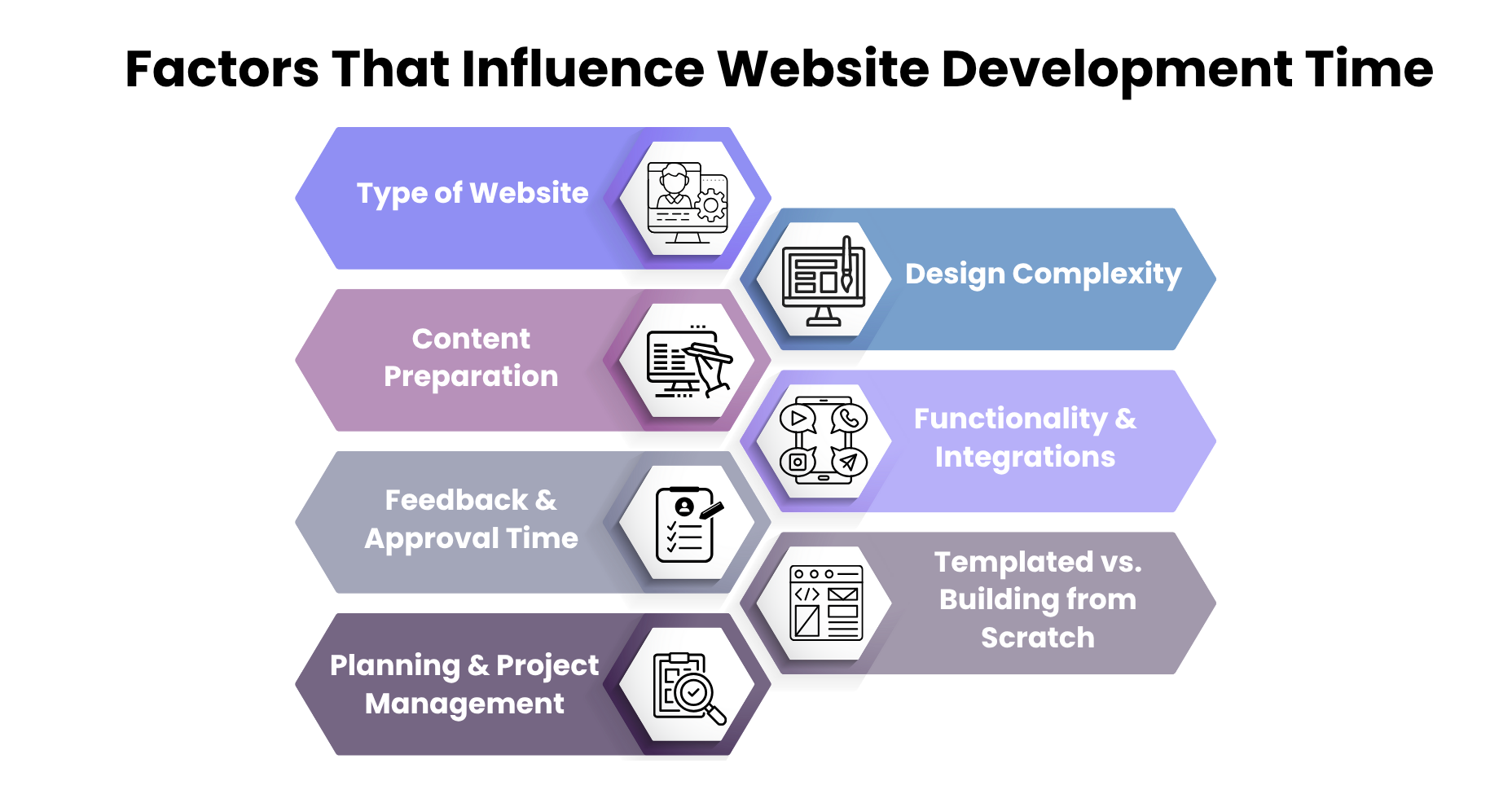
1. The Type of Website You’re Building
Are you creating a simple informational site or a complex eCommerce website with payment gateways, product filters, and custom dashboards? The more functionality you want, the longer it usually takes. A basic website is quicker to launch, but a custom website with advanced features takes more time and planning.
2. Design Complexity
Do you want something quick and clean, or completely custom-built to match your brand’s unique style? Custom design means more time spent on wireframes, UI/UX decisions, and feedback loops. The more screens, animations, or interactive features you want, the longer it’ll take.
3. How Prepared is Your Content?
Believe it or not, content delays are one of the biggest timeline killers while building a website. If you already have your images, videos, and copy ready to go, your development process will move much faster. If not, you’ll need time to create (or revise) all of it, and that can slow the timelines down.
4. Functionality & Integrations
Need a contact form? That’s easy. Need custom APIs, login systems, or third-party tools integrated into your site? That’s where things get a little more technical and time-consuming. The more features and integrations your website needs, the longer the development phase tends to be.
5. Feedback & Approval Time
Feedback and approval time is often overlooked while considering the average time to build a website. If decision-makers aren’t available to review designs or approve features quickly, things can get stuck. Fast feedback = faster progress. Delays in approvals = longer timelines.
6. Build From Scratch vs. Templated
If you’re wondering how long it takes to build a website from scratch, then the answer is that it’s naturally going to take longer than working off a pre-built framework. But starting from scratch also gives you full control over design, speed, and scalability. So it’s a trade-off worth considering.
7. Project Management
Doesn’t matter how great your website idea and planned timelines are, if the project management isn’t good enough, everything could fall apart. When you partner with a website development company for their services, ensure that they have an efficient and experienced project management team to ensure that the progress of your project is always tracked and on schedule.
There’s no universal timeline to answer how long does it take to build a website? – but the more clarity, content, and collaboration you bring to the table, the faster (and smoother) the build will be.
The Website Development Process (Step-by-Step Timeline)
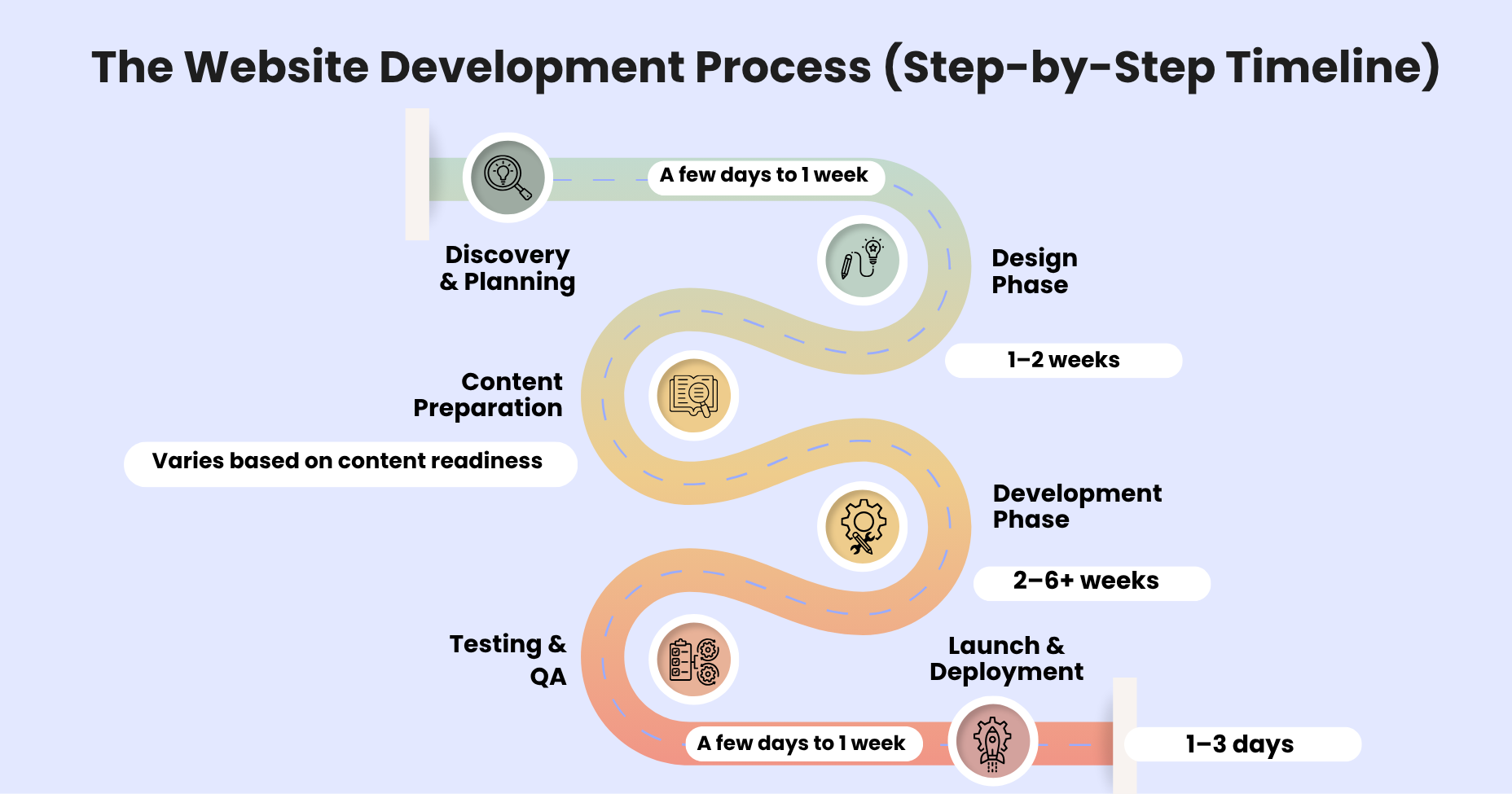
If you’ve ever wondered how long does it take to build a website, understanding the full process can give you a clearer picture. Most websites go through the same major phases, no matter the size or industry.
Below is a step-by-step breakdown of how to build a website from scratch and how each stage affects the overall timeline.
1. Discovery & Planning
Estimated Duration: A few days to a week
Every project begins with discovery and planning. This phase focuses on defining goals, planning the structure, and finalizing the tech stack. Clear direction early on reduces the average time it takes to build a website.
Tasks involved:
- Identifying the purpose of the website
- Choosing platforms and tools
- Structuring the sitemap and user journeys
2. Design Phase
Estimated Duration: 1–2 weeks
The next step in building a website from scratch is designing how it will look and feel. Based on user experience principles and your brand identity, wireframes and mockups are created and refined as a part of the design phase.
Tasks involved:
- Designing wireframes and page layouts
- Creating high-fidelity UI mockups
- Reviewing and refining designs
3. Content Preparation
Estimated Duration: Varies depending on content readiness
A major factor in how long it takes to build a website is whether or not content is ready. Delays in text, images, and other media can significantly slow the process and add to the timelines silently.
Tasks involved:
- Writing or gathering website copy
- Organizing media assets (images, video)
- Structuring content per design
4. Development Phase
Estimated Duration: 2–6+ weeks
This is the most time-intensive step. Whether it’s a basic website or a custom website, this stage determines how much time to build a website based on functionality and integrations.
Tasks involved:
- Coding frontend (HTML/CSS/JS) and backend systems
- Integrating content and APIs
- Configuring CMS or databases
5. Testing & QA
Estimated Duration: A few days to a week
Before launch, your site must be tested across devices and browsers. This step helps ensure that even a basic website meets performance and usability standards, to avoid any complications moving forward.
Tasks involved:
- Cross-device and cross-browser testing
- Fixing bugs or layout inconsistencies
- Running speed and SEO audits
6. Launch & Deployment
Estimated Duration: 1-3 days
Finally, your website goes live. For any type, whether it’s a custom website or an eCommerce website launch timing is influenced by final review and server setup.
Tasks involved:
- Deploying the site to a live environment
- Connecting the domain and securing it
- Running post-launch checks
The average time it takes to build a website depends on how complex it is, how much content is needed, and how efficiently each phase is executed. If you’re wondering how long it takes to build a good website, it’s safe to expect anywhere from a few weeks to several months, especially if you’re aiming for custom features and a strong user experience.
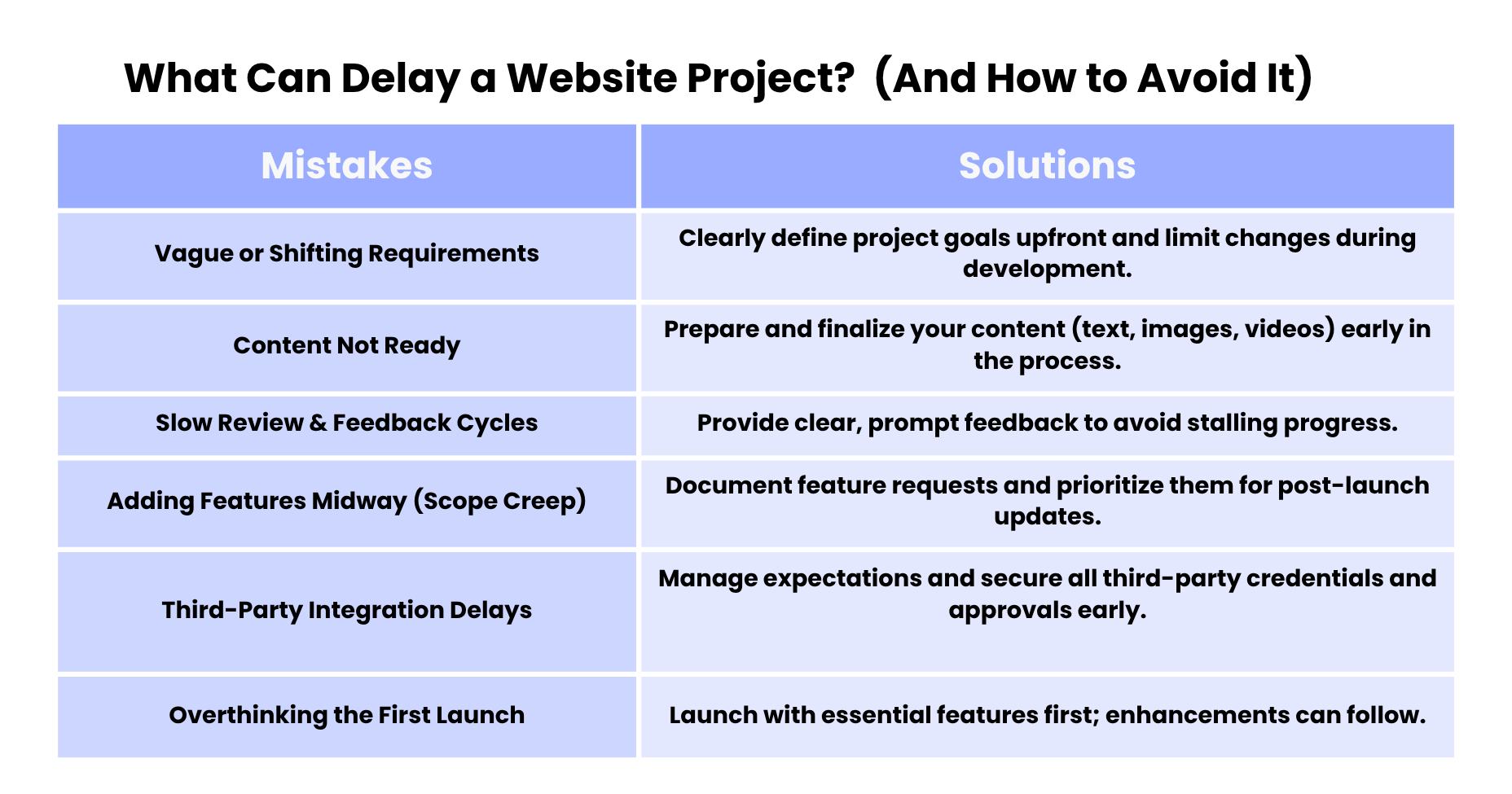
How Long Does It Take to Build a Website? – Timelines by Website Type
Let’s answer the question you came here for: how long does it take to build a website? The short version? It depends on what type of website you’re building.
But to give you a better idea, here’s a breakdown of typical timelines based on different website types- from the simplest to the most advanced:
1. Basic Website
Estimated Timeline: 1 to 3 weeks
This is your straightforward brochure-style site with a few pages – Home, About, Services, Contact, maybe a Blog. If you’ve been asking how long does it take to build a basic website, 1 to 3 weeks is where it lands. The process is usually quicker because the layout is simple, the content is minimal, and there are fewer moving parts.
2. Business or Informational Website
Estimated Timeline: 3 to 6 weeks
A step above a basic site, this type of website includes more pages, visual elements, and sometimes blog functionality or a booking/contact system. It’s often what a small business or consultant might need to present services, build trust, and attract leads.
3. eCommerce Website
Estimated Timeline: 6 to 10 weeks
Wondering how long does it take to build an eCommerce website? These take longer because they involve more complexity: product listings, payment gateways, cart functionality, inventory systems, and integrations with shipping or CRM tools. Content and product data also need to be prepped, which can add to the timeline.
4. Custom Website
Estimated Timeline: 2 to 4+ months
A custom website, built from the ground up with unique layouts, features, animations, and back-end systems, takes more time by nature. If you’re asking how long does it take to build a custom website, you’re likely working with multiple decision-makers, rounds of revisions, and custom functionality. These are ideal for companies with specific user flows or platform goals.
5. Web Portals or SaaS Platforms
Estimated Timeline: 4 to 6+ months
These are large-scale builds that often include user accounts, dashboards, data processing, admin panels, or custom workflows. In other words, these aren’t just websites, they’re platforms. Building something like this from scratch involves multiple teams, staged releases, and extensive testing.
If you’re trying to figure out how long it takes to build a good website, use this guide as a starting point – but remember, timelines can shift based on how prepared you are with content, how quickly decisions are made, and how complex your feature set is.
Even if you’re planning to build a website from scratch, staying organized and focused can help you go live faster, without impacting the quality.
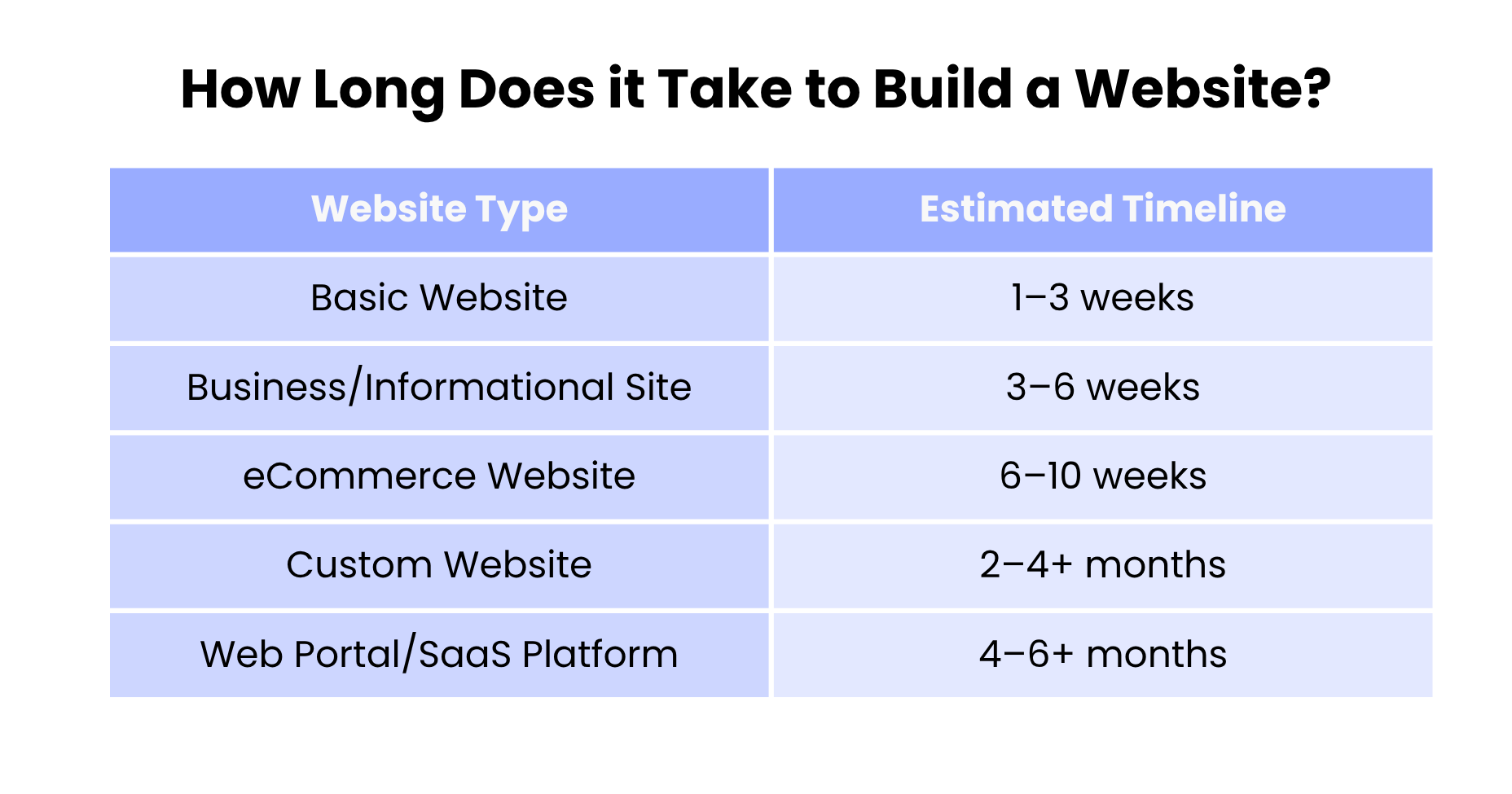
What Can Delay a Website Project (And How to Avoid It)
You’ve probably noticed by now that how long it takes to build a website isn’t always about the tech, it’s often about the process. Even the most well-planned project can hit unexpected slowdowns. The good news? Most of them are avoidable.
Here are some of the most common reasons why timelines stretch (and how to stay ahead of them):
1. Vague or Shifting Requirements
When project goals or features aren’t clearly defined from the start, or keep changing midway, it becomes hard to move forward efficiently. This directly affects how much time it takes to build a website, especially if developers need to rework completed features.
2. Content That’s Not Ready
One of the biggest bottlenecks in web development? Missing content. Whether it’s product descriptions, team bios, or homepage copy, your development team can’t move forward without it. Delayed content often means delayed launch.
3. Slow Review & Feedback Cycles
Web development is collaborative. Design drafts, content placements, and feature demos all need your feedback. The longer it takes to review and respond, the more the project stalls, which increases the average time it takes to build a website.
4. Adding Features Midway (a.k.a. Scope Creep)
It’s tempting to keep adding “just one more thing,” but those extra features come at a cost – usually more time and testing. This is especially true for anyone looking to build a website from scratch where custom functionality is involved.
5. Third-Party Integrations or Delays
Waiting on things like a payment provider, a CRM tool, or even domain transfers can lead to hold-ups, especially if approvals or credentials are out of your control.
6. Overthinking the First Launch
Wanting your site to be perfect is normal. But trying to launch with every possible feature on day one can cause delays. Remember, even great websites evolve over time.
The biggest delays usually come from content, communication, and changing direction mid-build. Keeping things clear, collaborative, and focused can help reduce how long it takes to build a website, no matter what type you’re building.
How to Speed Up Website Development Without Sacrificing Quality
By now, you probably get it, how long it takes to build a website depends on a lot of moving parts. But what if you’re short on time or working toward a launch deadline? The good news: there are smart ways to move faster without impacting the budget and quality of your project.
Here’s how to streamline the process without compromising on quality:
1. Get Clear on What You Want (Before Anything Else)
One of the easiest ways for you to reduce how much time it takes to build a website is to get aligned from the start. That means knowing what kind of site you need (basic, eCommerce, custom), what content is required, and which features are must-haves vs. nice-to-haves.
Pro tip: A little extra time spent upfront can save weeks of back-and-forth later.
2. Prepare Your Content Early
If there’s one thing that slows down projects more than anything, it’s waiting on content. Whether you’re launching a basic website or trying to build a website from scratch, development can only go so far without real copy and media.
What helps:
- Finalizing key pages like Home, About, and Contact first
- Having product images and descriptions ready (for eCommerce sites)
- Writing content with a web-first mindset—clear, scannable, and action-oriented
3. Focus on a Solid Phase 1 (You Can Always Add More Later)
Trying to launch with every feature imaginable? That’s how simple sites turn into multi-month projects. Instead, you must focus on launching a solid foundation first, then iterating after you go live.
This keeps your project lean and helps reduce the average time it takes to build a website without compromising long-term vision.
4. Keep Feedback Timely and Specific
When feedback is delayed or unclear (“I don’t like it, but I’m not sure why”), it stalls progress and leads to unnecessary revisions. The faster and clearer your approvals are, the smoother the workflow.
Example:
Instead of “Let’s make this section better,” try “Let’s simplify this paragraph and move the CTA button higher.”
5. Avoid Last-Minute Changes
Tweaking layouts or adding new features during development may seem small, but they often require rework in both design and code. This can extend how long it takes to build even a good website.
What helps:
- Logging non-urgent changes for future updates
- Waiting until after launch to tackle “wishlist” features
6. Use Tools That Support Collaboration
Whether it’s design review tools, shared checklists, or cloud-based content platforms, using the right tools can reduce confusion, centralize communication, and keep things on track.
If you’re serious about shortening how long it takes to build a custom website or launch your next eCommerce website on time, it comes down to planning, preparation, and clear communication. You don’t need to rush, just stay focused and organized.
Conclusion: So, How Long Does It Take to Build a Website?
If there’s one thing we’ve learned, it’s that how long it takes to build a website depends on a whole lot more than just design and development. From content prep and decision-making to feature complexity and feedback loops, every step plays a role in shaping the final timeline to make your dream website.
For most businesses, the average time it takes to build a website ranges from a couple of weeks to a few months, depending on the size, scope, and how well things are planned from the start.
Whether you’re looking to:
- Build a basic website to establish your online presence.
- Launch an eCommerce website with all the necessary tools,
- Or create a fully custom website tailored to your brand –
Clarity, preparation, and timely communication are your best allies.
At the end of the day, a successful website isn’t just about how fast it gets built, it’s about how well it serves your users and your business. If you’re also looking to create a website for your business, you can contact our experts to get a customized timeline to start building on your ideas right away!